Guide
How to Plan a Wedding Step by Step: The Complete 2026 Guide
Planning a wedding in 2026 feels overwhelming until you break it into clear, repeatable steps. The average U.S. couple spends roughly $34,000 (The Knot, 2026) and dedicates around 12 months to planning, but with a system you can do it calmly, protect your savings and actually enjoy the engagement. This guide walks you through every stage in order, from the first budget conversation to the final 30-day countdown.
Step 1: Set Your Budget First
Before you pick a single color or flower, decide what you can realistically spend. Add any family contributions, then divide the total into categories. Writing it down keeps every later decision grounded in real numbers. A reliable rule for 2026 is to allocate about 40% to the venue and catering, 15% to photography and video, 10% to attire, 10% to flowers and decor, and keep a 5% buffer for surprises. To map every dollar in minutes, start with our free wedding budget calculator and adjust the percentages to fit your priorities.
Step 2: Build the Guest List
Your guest count drives almost every other cost, because catering is usually priced per head — often $75 to $150 per person. Draft an A-list of must-invite people and a B-list you can add later. Cutting just 20 guests at $120 each saves $2,400, so this is one of the fastest ways to control spending. Agree on the final number with both families early to avoid awkward additions, and remember that roughly 10% to 15% of invited guests typically decline, which gives you a little breathing room on the count.
Step 3: Lock the Date & Venue
Popular 2026 dates book out 9 to 14 months ahead, especially Saturdays from May to October. Choose two or three possible dates before you tour venues so you stay flexible. Booking a Friday or Sunday can trim venue fees by 20% to 30% compared with peak Saturdays.
Step 4: Hire Your Key Vendors
Secure the vendors who can only serve one wedding per day first: photographer, caterer, band or DJ, and florist. Check references, request itemized quotes, and never pay the full balance up front — a deposit of 25% to 50% is standard. Keep every contract, payment date and contact in one place so nothing slips.
Step 5: Choose Attire & Style
Order the wedding dress early, since gowns can take 6 to 9 months to arrive plus fittings. Coordinate the wedding party, decide on a palette, and confirm your overall aesthetic so invitations, flowers and signage all match.
Step 6: Handle the Details
This is invitations, menu tasting, seating chart, favors and a day-of timeline. Send invitations 8 weeks before the date and set the RSVP deadline at least 3 weeks out so you can give catering a final count.
Step 7: The Final Month
Confirm headcount, finalize payments, build a detailed schedule, and delegate tasks to a planner or trusted friend. Pack an emergency kit and give yourself permission to stop adding to the to-do list. Reconfirm arrival times with all vendors 7 days out, prepare cash tips of 10% to 20% where appropriate, and walk through the timeline once with your key helpers so everyone knows their role.
Your Month-by-Month Timeline
| Months Before | Key Task |
|---|---|
| 12–10 | Set budget, draft guest list, book venue & date |
| 9–8 | Hire photographer, caterer, band & order gown |
| 7–5 | Book florist, plan decor, reserve hotel blocks |
| 4–3 | Send invitations, taste menu, buy attire |
| 2 | Collect RSVPs, build seating chart & timeline |
| 1 | Confirm headcount, pay balances, delegate day-of roles |
The secret to a relaxed wedding is doing the right task at the right time instead of everything at once. Tracking your budget closely makes every choice intentional. For the vendors and payments, the Plannful Wedding Vendor Tracker & Payments keeps every quote, deposit and due date in one spreadsheet for Microsoft Excel and Google Sheets.
However you start, follow these seven steps in order, keep your numbers visible, and your 2026 wedding will come together one confident decision at a time.
Frequently asked questions
How long does it take to plan a wedding in 2026?
How much should I budget for a wedding?
What should I book first when planning a wedding?
How can I save money on my wedding?
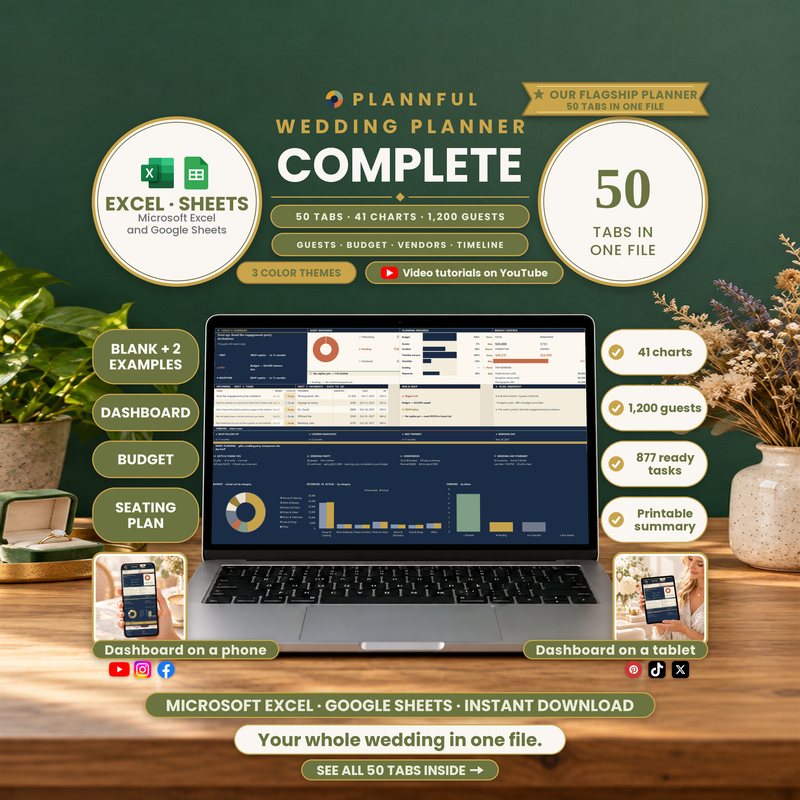
Wedding Planner Complete
One workbook with 50 sheets that take you from "just engaged" to the wedding day. Pick navy, Sage or Blush. Works in Microsoft Excel.
Plannful Wedding Planner Complete
- Start Here, Setup, Dashboard, Instructions
- Couple Profile, Priorities & Style
- Budget, Payments, Honeymoon Budget
- Guest List, Seating Plan, Gifts & Thank-you, Envelopes, Guest Accommodation
- Confirmed Vendors, Vendor Toolkit, Vendor Comparison, Contracts & Contacts, Appointments
- Excel
Related guides & free tools
- Average Cost of Wedding Flowers in 2026: Full Price BreakdownWedding flowers average $2,500–$3,500 in 2026 (8–10% of budget). See a full pr
- Average Cost of a Wedding Photographer in 2026: Tiers, Hours & What Drives the PriceThe average cost of a wedding photographer in 2026 is $3,000 to $5,000, about 10-12% of yo
- Micro Wedding Cost in 2026: What a Small Wedding Under 50 Guests Really CostsMicro wedding cost in 2026 runs $8,000 to $15,000 for under 50 guests. See a full $10,000
- Destination Wedding Cost in 2026: A Line-by-Line Budget BreakdownWhat does a destination wedding cost in 2026? Plan on $34,000-$45,000 with a smaller guest
- Average Wedding Catering Cost Per Person in 2026: Real Per-Guest Prices by Service StyleWedding catering averages about $80 per person in 2026 (food only). See real pe
- How Much Does an Open Bar Cost at a Wedding in 2026?Open bar wedding cost in 2026 runs $15-$45 per guest, or roughly $2,000-$4,500 for 100 gue
- Free Wedding Budget CalculatorFree tool · no signup
- Wedding Cost Estimator by Guest CountFree tool · no signup
The Plannful list
Join the Plannful list
Occasional wedding-planning emails from Plannful, and a note when a new template is ready. No spam, unsubscribe anytime.